"Going for broke, rock till you choke
It don't matter if you drink or smoke
Speak through the beat, get up on your feet
Sweating like a hound dog, white as a sheet
Don't you be scared, don't you be scared
Everybody terrified, I don't seem fair
What are you waiting for
What do you think you were created for
Out of your seat, blind in the heat
Do the nasty boogie mama, stomp your feet"
Hilarious video; the lyrics ("do the nasty boogie") and the video together so well. Of course, one must not make light of what was a terrible time for mankind. But, I mean, "born to raise hell, we know how to do it and we do it real well"?
I'm pretty sure Lemmy did not intend to parody the Nazis when he wrote this song, but it works, and what is better is that it works unintentionally. In fact, to make things merrier, Lemmy's well known for collecting Nazi memorabilia because "the bad guys have the best costumes". So the circumstantial-ness of the whole thing is quite...elegant.
...bringing up an important question: do people largely like to be lead? and do some tiny fraction of them like to lead? because if you put the two together, you get an equilibrium. Can't be a stable one though. Well unless you're the Congress Party and you happen to exist in India.

I amuse myself here; Your amusement is intended but boundedly so
Monday, December 20, 2010

Wednesday, October 20, 2010
a bout de souffle
the downfall of a supermodel:
acme tattoo kent washington kent smith obituary contributing factors and smoking italian vogue subscription prairie smoke chemicals found in cigarettes barbcue smoke generator how to smoke ground beef jerky
oh, spam!
acme tattoo kent washington kent smith obituary contributing factors and smoking italian vogue subscription prairie smoke chemicals found in cigarettes barbcue smoke generator how to smoke ground beef jerky
oh, spam!
Saturday, October 16, 2010
Sunday, October 10, 2010
a scene i'd like to see
the camera spans to a placid ocean with families playing on the beach and people generally chilling out
the skies darken
the ominous sound of thunder drums upon the beach
the opening lines of AC/DC's "Hells Bells" start up
and
.
.
.
Rajni comes in riding on a massive wave
rescues a drowning swimmer
touches down on the beach, tosses a coin horizontally and flicks a cigarette into the corner of his mouth...
...until a kid cries out, because there's a shark in the water...
Rajni then stubs the cigarette out on the shark which disappears and says
"Smoking kills, but Rajni Saves"
(except for that he'd request AC/DC to say "heaven's bells" and "rajni's coming for you"...and you know what? They'd do it. Because he is hero of heroes, star of stars...)
the skies darken
the ominous sound of thunder drums upon the beach
the opening lines of AC/DC's "Hells Bells" start up
and
.
.
.
Rajni comes in riding on a massive wave
rescues a drowning swimmer
touches down on the beach, tosses a coin horizontally and flicks a cigarette into the corner of his mouth...
...until a kid cries out, because there's a shark in the water...
Rajni then stubs the cigarette out on the shark which disappears and says
"Smoking kills, but Rajni Saves"
(except for that he'd request AC/DC to say "heaven's bells" and "rajni's coming for you"...and you know what? They'd do it. Because he is hero of heroes, star of stars...)
Tuesday, October 5, 2010
This one's special
When the Wild Wind Blows
They've created something wonderful here. Based on the movie - "When the Wind Blows" - available on youtube. It is quite a bleak movie, about a remarkably foolish British couple that question nothing about what they're told regarding a possible nuclear attack, and pay a heavy price for it. Consider yourself warned. It is a very sad movie - something mirroring the spirit of an Empire now crushed.
The song is quite emotional (somewhat less dark), especially after seeing the movie. I have no hesitation in saying this is one of the best songs I've heard from the band, on par with perhaps "Hallowed be thy Name". I think it is relevant that most of the band grew up with the shadow of the London bombings over their heads, and it shows up in this song in a very very stark manner.
It is rare, these songs you know will go down in history.
"He sees the picture on the wall, it’s falling down (...Upside down)
He sees a teardrop from his wife roll down her face (...Saying Grace)
Remember times they had, they flash right through his mind (...Left behind)
Of a lifetime spent together long ago (...Will be gone)"
They've created something wonderful here. Based on the movie - "When the Wind Blows" - available on youtube. It is quite a bleak movie, about a remarkably foolish British couple that question nothing about what they're told regarding a possible nuclear attack, and pay a heavy price for it. Consider yourself warned. It is a very sad movie - something mirroring the spirit of an Empire now crushed.
The song is quite emotional (somewhat less dark), especially after seeing the movie. I have no hesitation in saying this is one of the best songs I've heard from the band, on par with perhaps "Hallowed be thy Name". I think it is relevant that most of the band grew up with the shadow of the London bombings over their heads, and it shows up in this song in a very very stark manner.
It is rare, these songs you know will go down in history.
"He sees the picture on the wall, it’s falling down (...Upside down)
He sees a teardrop from his wife roll down her face (...Saying Grace)
Remember times they had, they flash right through his mind (...Left behind)
Of a lifetime spent together long ago (...Will be gone)"
Sunday, October 3, 2010
Some people I admire
From time to time, I'm going to write a bit more about economics. This time I will focus on listing some of the people I've been influenced by over the last year and a half or so (which is when I really began to learn a little economics), and give a brief reason why. One funny consistency amongst all of the following is that they have all been controversial, but creative in a way that seems frustratingly other-wordly.

Ronald Coase: for having the courage to question the (later fully completed) general equilibrium model for failing to describe the forms that firms take in the real world, and making the observation that prices cannot be the only parameters that determine allocation of resources. Also for making the observation (in 1960) that lawyers think about externalities in a more sensible manner than how economists were doing so (back then), another observation that has been revolutionary. These two papers have a combined citation account of ~30,000 - the highest by very, very far.

Oliver Williamson: for pioneering almost (but not quite) in a single handed manner, the field of (what I will call) "Comparative Economic Governance forms in an Industrial sense". The first to give us an analytical framework within which to understand the organization of the firm (and if firms organize at all) - the field of inquiry begun by Coase. Most importantly, for telling us the "firm" (i.e. planning) and the "market" (the "free market") are both flawed ways of organizing, but each can be okay depending on what the parameters of the situation are.

Jim Heckman: for describing a technique to solve the selection problem - some people may earn zero wages because they value staying at home, the ignorance of this problem leads to wrong estimates, thus regression models need to account for this. This is one of the earliest - perhaps the first - examples of the bridge between structural and reduced-form models. The imagination required for this is difficult to communicate.

Peyton Young: for incorporating social norms with (traditional) economic modeling to figure out a equilibrium concept (with Dean Foster) and using it to produce a beautiful, compelling analysis (along with Mary Burke) of the role of custom and competition in the organization of agricultural crop-sharing contracts. One of the most exciting economists around at this time and very active. Unlike your freakonomists, his understanding of sociology mirrors that of Becker's, and the incorporation of the thoughts of other disciplines is done in a systematic manner.
There's lots more, but these are the first four I can think of.
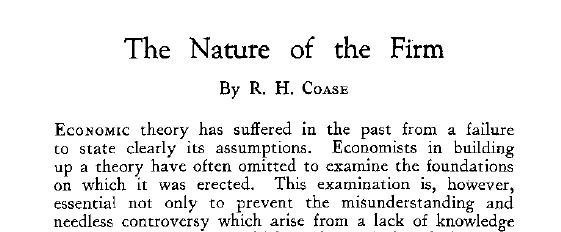
Ronald Coase: for having the courage to question the (later fully completed) general equilibrium model for failing to describe the forms that firms take in the real world, and making the observation that prices cannot be the only parameters that determine allocation of resources. Also for making the observation (in 1960) that lawyers think about externalities in a more sensible manner than how economists were doing so (back then), another observation that has been revolutionary. These two papers have a combined citation account of ~30,000 - the highest by very, very far.

Oliver Williamson: for pioneering almost (but not quite) in a single handed manner, the field of (what I will call) "Comparative Economic Governance forms in an Industrial sense". The first to give us an analytical framework within which to understand the organization of the firm (and if firms organize at all) - the field of inquiry begun by Coase. Most importantly, for telling us the "firm" (i.e. planning) and the "market" (the "free market") are both flawed ways of organizing, but each can be okay depending on what the parameters of the situation are.

Jim Heckman: for describing a technique to solve the selection problem - some people may earn zero wages because they value staying at home, the ignorance of this problem leads to wrong estimates, thus regression models need to account for this. This is one of the earliest - perhaps the first - examples of the bridge between structural and reduced-form models. The imagination required for this is difficult to communicate.

Peyton Young: for incorporating social norms with (traditional) economic modeling to figure out a equilibrium concept (with Dean Foster) and using it to produce a beautiful, compelling analysis (along with Mary Burke) of the role of custom and competition in the organization of agricultural crop-sharing contracts. One of the most exciting economists around at this time and very active. Unlike your freakonomists, his understanding of sociology mirrors that of Becker's, and the incorporation of the thoughts of other disciplines is done in a systematic manner.
There's lots more, but these are the first four I can think of.
Subscribe to:
Posts (Atom)